

BLOG
Tools in Your Pockets
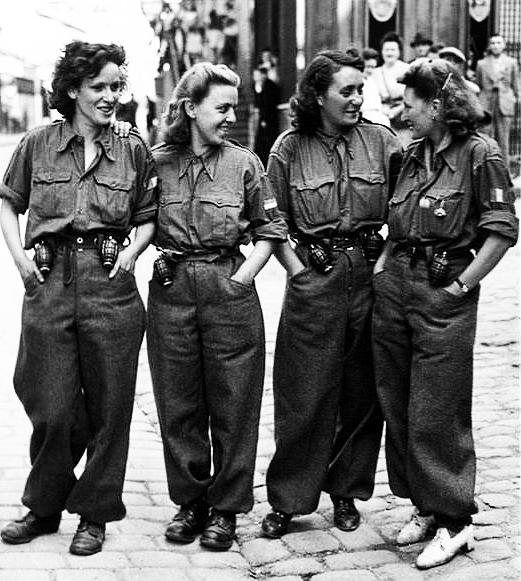
Pockets. They’re designed to keep useful tools close by. Against the body. Like an appendage. So that when you need to jot something down. Remember a task. Fix something. Hold something for later. You don’t have to scramble around like a basket case trying to find it.
Or rely on someone else for help.
In short: they help you be better at being you.
Up until the French revolution women had large pockets tucked under their voluminous skirts that were large enough to hold books, mending materials, writing devices, and even lunch.
But as fashion became more streamlined, women’s pockets moved off the body and into handbags.
More distant. Easier to misplace. Or have stolen. Making essential tools harder to find and more difficult to access in need.
“Pockets speak to this question of preparedness, and your ability to move in public and to be confident. It’s really difficult to get around if you don’t have what you need, and it’s about, I think it’s about mobility and movement in public,” says Hannah Carlson, a lecturer at the Rhode Island School of Design who was interviewed about the politics of pockets in the awesome podcast, Articles of Interest.
So what do pockets have do you with you?
Pockets. They’re designed to keep useful tools close by. Against the body. Like a second skin. So that when you need to jot something down. Remember a task. Fix something. Hold something for later. You don’t have to scramble around like a basket case trying to find it.
Or rely on someone else for help.
In short: they help you be better at being you.
Up until the French revolution women had large pockets tucked under their voluminous skirts that were large enough to hold books, mending materials, writing devices, and even lunch.
But as fashion became more streamlined, women’s pockets moved off the body and into handbags — more distant, easier to misplace, or have stolen.
Making essential tools harder to find and more difficult to access in need.
“Pockets speak to this question of preparedness, and your ability to move in public and to be confident. It’s really difficult to get around if you don’t have what you need...” says Hannah Carlson, a lecturer at the Rhode Island School of Design who was interviewed about the politics of pockets in the awesome podcast, Articles of Interest.
So I guess you're wondering what pockets have do you with coaching?
Well, I’ve been thinking recently about the tools we need to move ahead with our projects.
Women often think they need to have everything mastered, integrated and assimilated into every fiber of their body in order to be legitimate, comfortable and prepared.
Maybe it has to do with the diminishing size of pockets over time and the growing sense that men are better equipped for the challenges of the world than we are.
Who knows.
But what interests me is this question: What tools do you need to get you where you want to go with confidence and ease?
And when I say "tools" I'm not talking about hammers and nails and mending materials, in fact your tools don't have to be objects at all!
A client of mine recently described an "immaterial toolkit" that she created to collect “things” she knows are good for her as she journeys forward.
Friendships where she can be vulnerable and real
Rituals that bring her immense joy
Experiences that spark curiosity and enable growth
Mindsets that are benevolent and constructive
They’re all tucked away in her toolkit — safe, cosy and close. Carefully selected for the precious vitality they bring her.
Once you know where you’re going, the next step is to choose the tools you need to help you get there. Venturing out ill-equipped just sets you up for pain and a whole lotta trouble.
You wouldn't head into the forest for an overnight in the wild without a compass, a sleeping bag, and some coffee for the morning after, right? That would be bonkers.
So tell me, what tools do you want to put in your pockets to get you where you want to go?
Introducing the wonderful world of Chez Cameil and the woman who built it
Following your gut. Listening to your dreams. Building your fantasy business. It’s wayyyy easier said than done.
You could be the most creative and focused person on the planet but when self-doubt, fear and insecurity pop up those dreams will scatter away to some safe little corner of your mind, or deep down on a to-do list that you’re sure to forget.
That’s why I’m totally fascinated by people who find the clarity and confidence to follow through with their dreams, even when it scares the hell out of them…
Which is why I’d love to introduce to my friend Cameil Kaundart.
I met Cameil years ago while I was working for Yelp. She was running around the kitchen with a floral headscarf and a couple of trays of American cookies, testing recipes weeks before the launch of my friend Marc’s cafe, Bob’s Bake Shop. She greeted me with such an insanely warm vibe that I loved her immediately.
Fast forward to today.
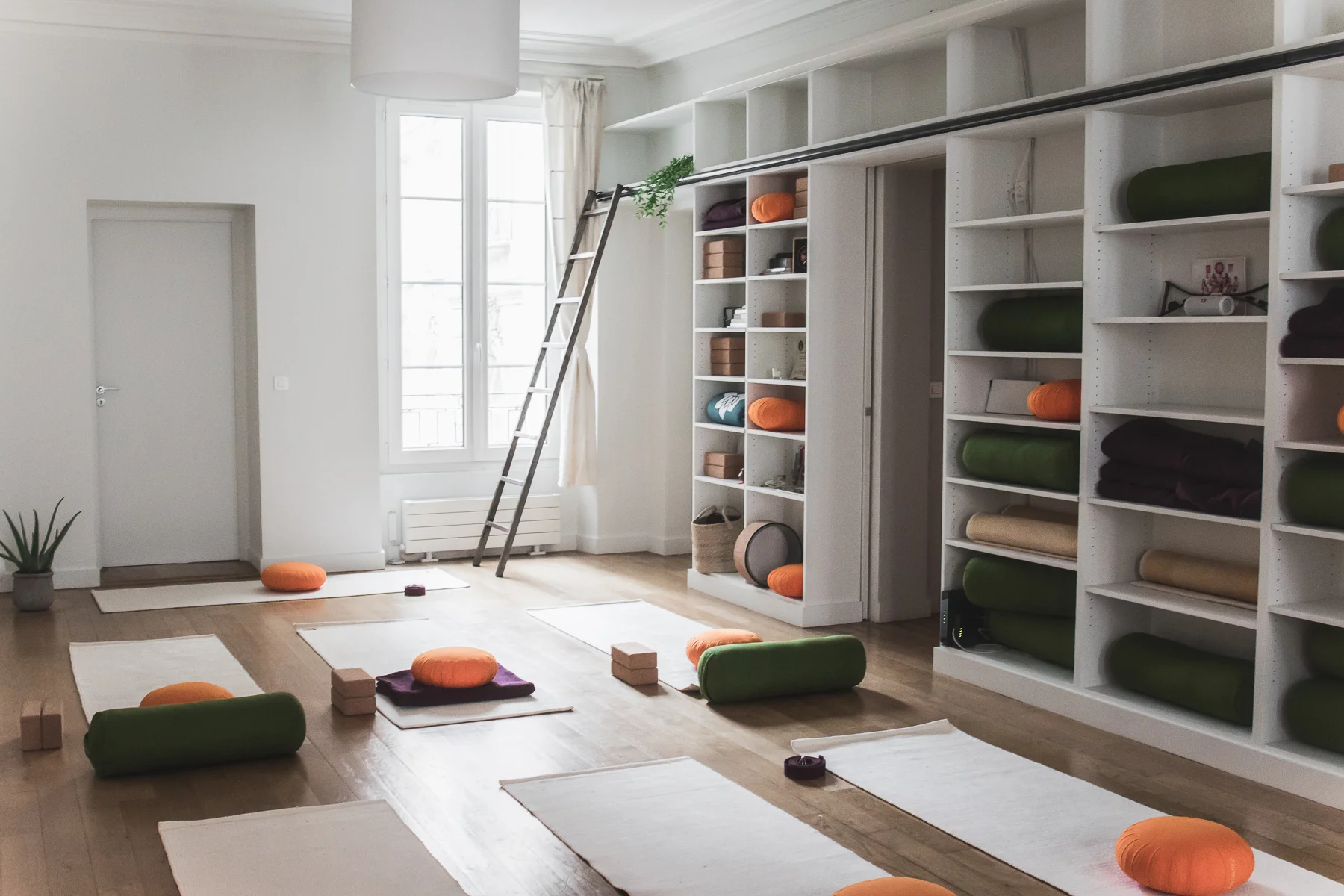
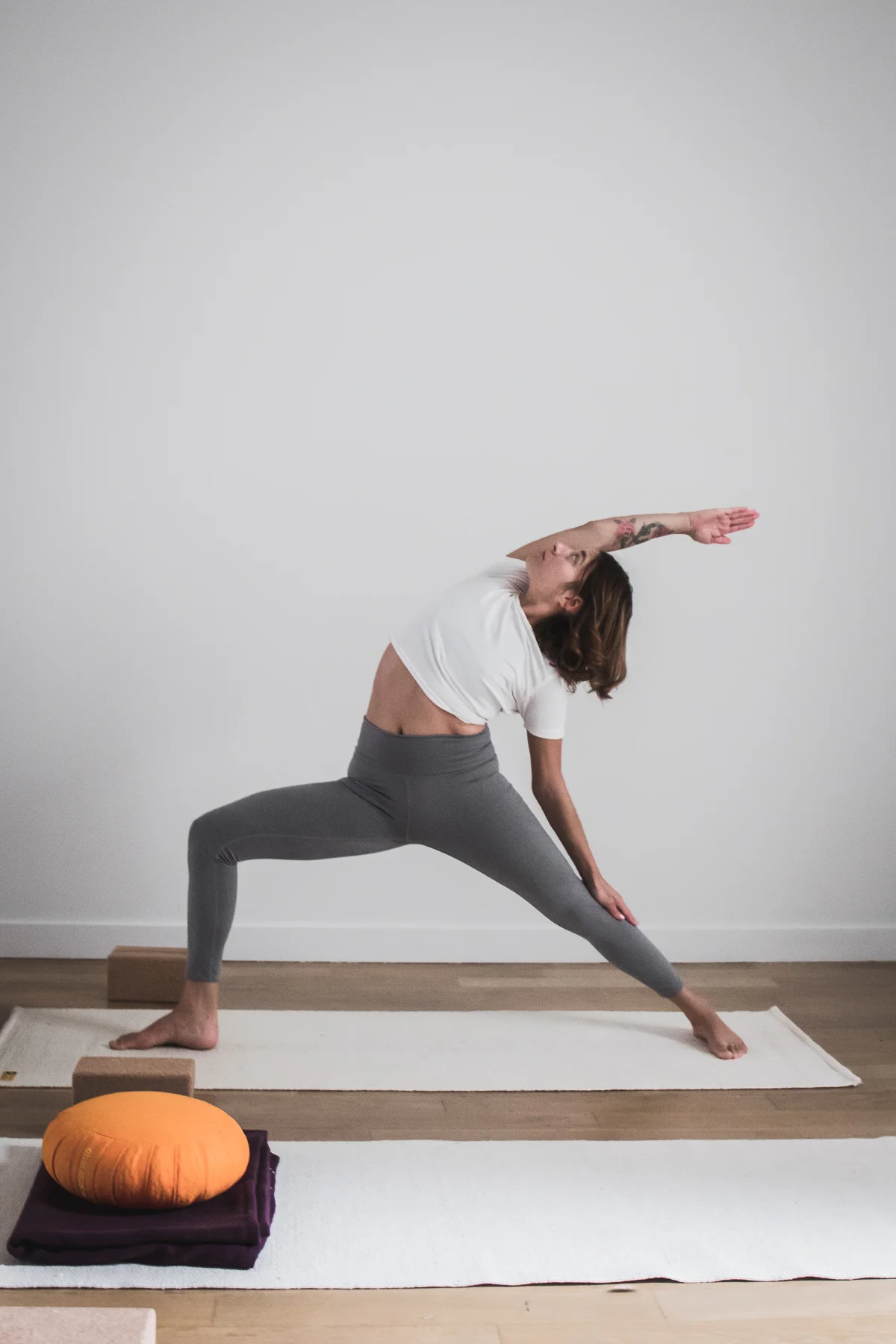
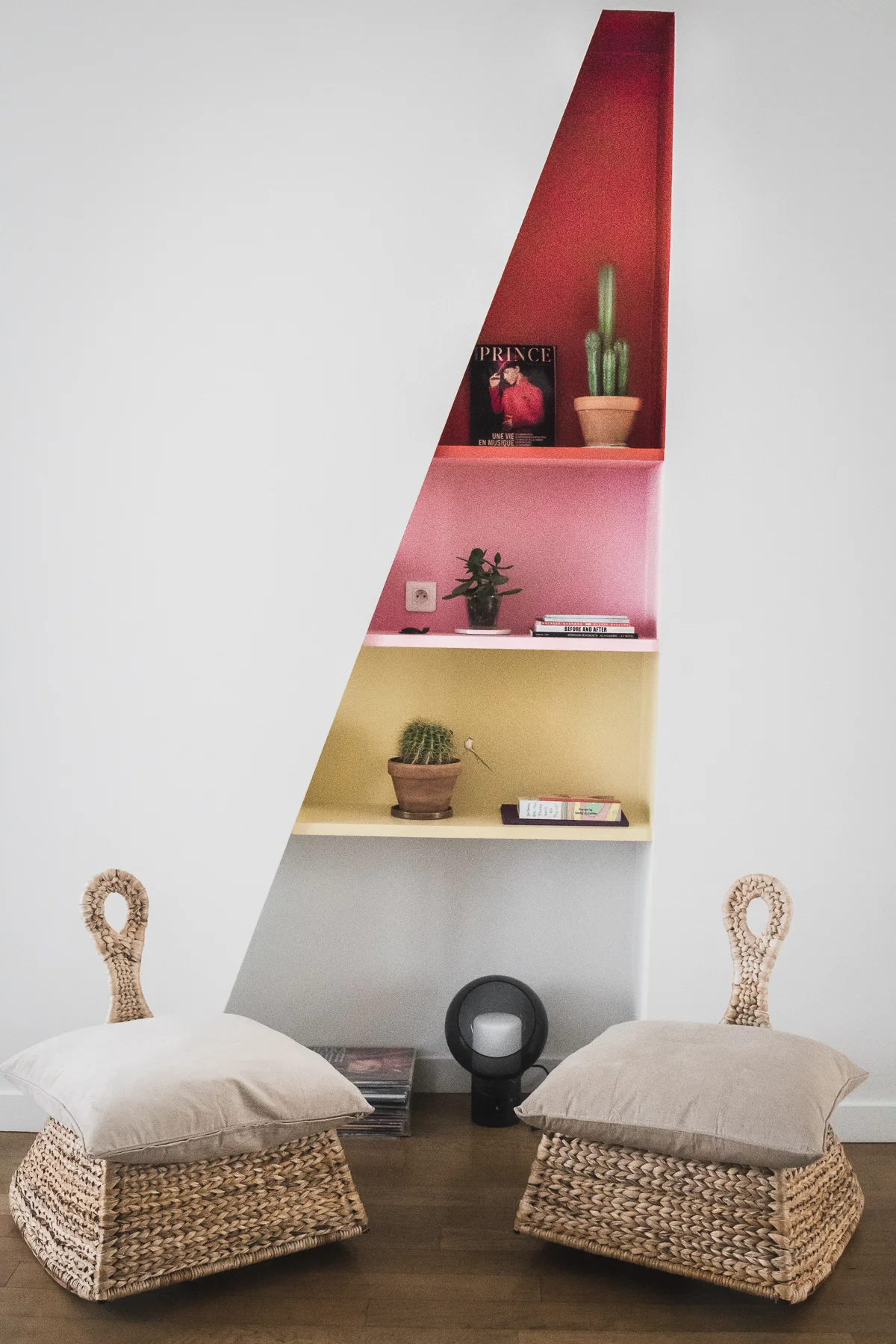
I’m officially the luckiest coach in Paris because I get to see Cameil (and her cookies) three days a week at the cozy new space she launched this Fall. Located in central Paris, Chez Cameil is a cheerful, colorful loft where people come for healthy food, yoga classes, lectures, events and other well-being services, like coaching and hypnosis. It’s where I see my clients three days a week and I absolutely love it!
But Chez Cameil was lodged in Cameil’s head for years as a “maybe-one-day-I’ll-finally-get-it-together-to-make-this-happen” kind of dream.
I had Cameil on the phone this summer the day she had to tell the landlord whether she was going to take the space. It was not a light decision to make for loads of reasons that I’m sure you can relate to (self doubt, money, and the huge responsibility that come with following through) but on top of that she was also just separating from her French husband and reconstructing her identity as a single American on French soil.
I so, so admire her for finding the clarity and courage to just go for it! So I’d thought I’d share her story with a little Q&A with her below about how she made it all happened. Hope you find Cameil as inspiring and fascinating as I do!
Following your gut. Listening to your dreams. Building your fantasy business. It’s wayyyy easier said than done.
You could be the most creative and focused person on the planet but when self-doubt, fear and insecurity pop up those dreams will scatter away to some safe little corner of your mind, or deep down on a to-do list that you’re sure to forget.
That’s why I’m totally fascinated by people who find the clarity and confidence to follow through with their dreams, even when it scares the hell out of them…
Which is why I’d love to introduce to my friend Cameil Kaundart.
I met Cameil years ago while I was working for Yelp. She was running around the kitchen with a floral headscarf and a couple of trays of American cookies, testing recipes weeks before the launch of my friend Marc’s cafe, Bob’s Bake Shop. She greeted me with such an insanely warm vibe that I loved her immediately.
Fast forward to today.
I’m officially the luckiest coach in Paris because I get to see Cameil (and her cookies) three days a week at the cozy new space she launched this Fall. Located in central Paris, Chez Cameil is a cheerful, colorful loft where people come for healthy food, yoga classes, lectures, events and other well-being services, like coaching and hypnosis. It’s where I see my clients three days a week and I absolutely love it!
But Chez Cameil was lodged in Cameil’s head for years as a “maybe-one-day-I’ll-finally-get-it-together-to-make-this-happen” kind of dream.
I had Cameil on the phone this summer the day she had to tell the landlord whether she was going to take the space. It was not a light decision to make for loads of reasons that I’m sure you can relate to (self doubt, money, and the huge responsibility that come with following through) but on top of that she was also just separating from her French husband and reconstructing her identity as a single American on French soil.
I so, so admire her for finding the clarity and courage to just go for it! So I’d thought I’d share her story with a little Q&A with her below about how she made it all happened. Hope you find Cameil as inspiring and fascinating as I do!

Q&A with Chez Cameil Founder Cameil Kaundart
What exactly is Chez Cameil for you and what do you want people to experience here?
Chez Cameil is a manifestation of my dream to create a community where all people feel welcome to take care of their well-being, practice yoga, celebrate healthy food, share their ideas, emotions and desires.
My goal is to create a family atmosphere, where people can gather and feel ‘at home’, where they can take the time to rest, refresh their minds and grow in an open and collaborative space.
Chez Cameil was a dream of yours for some time. How did you know that this was the right time to go for it?
You know that feeling when something you want scares you, but you just know you have to go for it? It’s the moment you’ve been asking the universe for, putting all that hard work into mentally, spiritually and physically and now it’s right here in front of you. I had that moment and I took it.
I’d been working on the idea of Chez Cameil for a good five years, and it wasn’t until just last year that I finally narrowed it down to the version it is today, many thanks go to my good friend Gwen. She really helped me turn my idea from one giant cloud to a nice streamlined lighten bolt.
I was working away on the business plan when my husband and I decided to separate. I was then not only looking for a space for Chez Cameil, but also looking for a new home.
I’ve always been good at working, being focused on a goal and doing whatever it takes to get it done, but in that moment I realized my work was all I had. I had lost my couple and now only had myself and my work, so I went into extreme Cameil mode. Those of you who know me may be laughing, thinking she is always in crazy organized Cameil mode. Lol
Knowing that I was on my own again after eight years of sharing my life with someone put me into survival mode and I spent all my time looking for a space and developing Chez Cameil as if my life depended on it. Let's face it, life is easier when you are two and have the support of family or a partner. I live far from my family.
So, in one month I started a crowdfunder with KissKissbankbank that eventually raised 10,000€. They kept telling me that no one ever raises that much money. I would not take no for an answer and insisted that I could do it, and did!
I felt like life was testing me, so I decided to turn all the sadness, anger and confusion I had into fuel to finally do what I had been wanting to do for sometime.
It was my moment of rebirth and I am forever grateful for it. My now ex-husband has been a great support and we remain friends, but sadly it took us separating for me to be pushed into that moment of fear and then overcome it and turn it into something beautiful that I can now be proud of.
Many people struggle to find a professional path that brings them joy and is in total sync with who they are, their values and natural skills. How did you figure that out?
Through a mix of trials and gut feelings.
I was an English major, working at a café as a Barista in Seattle where I would occasionally bake cute goodies. The owner insisted that I go to culinary school and bought me all the tools and books I needed to sign up, so I kind of had to.
After signing up and dropping my English major, I decided I should at least work in a kitchen first before paying all that money on schooling. So I went around asking all the top restaurants in Seattle if I could work for free for a week to see if I liked this as a profession.
After a long list of rejections, a wonderful restaurant accepted my funny offer. I loved it, and them me. I stayed there for five years working my way up from the bottom cookie scooper to cake decorator to pastry chef. Thanks Dhalia Lounge! I’ve been cooking every sense.
However, I am no longer a pastry chef. I feel I tell a lot of people this but Ill tell you too: We need to be evolving constantly. “The only constant in life is change,” says Albert Einstein.
I am not the same chef I was 10 years ago nor the same person I was a year ago, so why should my job be the same? All the years of life experience I have created for myself have shaped me into this person I am now. I feel like I have been simply, by trial and error, taking what I like from each experience I have had in my life to create a synergy that aligns with my work.
I’m not saying it’s easy. It takes quitting jobs, taking big risks, self-confidence, and a good support system, being selfish at times and failing and trying again.
I was once told I was like the film “Yes Man,” because you could offer me any job and I was always up for the challenge. I was never scared to trust myself, I knew I could learn something from this experience and apply it to the next. So over the past 10 years I have been doing just that.
You talk a lot about listening to your intuition and knowing when something feels right. How do you connect with those sensations?
I spent a lot of time building a better relationship with myself over the past years and asking myself the right questions. What scares me about being single again? Where do I want to be in a year? What’s important to me? Asking these kinds of questions and really sitting with myself until I find the answers. Using meditation and journaling have been very helpful tools for me. When I feel my intuition is clouded I often retreat to an Ashram or a quiet place to be alone for as long as I can be with my thoughts to work it out.
Also, since I was a little girl, I’ve had very visual dreams and I’ve always looked to them for answers in my day-to-day life.
Two dreams in particular have changed my life.
In my early 20’s I died in a dream, but died really enjoying this weird bouncing bridge in the middle of a big beautiful lake surrounded by trees and woke up fearless and decided to leave Seattle and travel around South East Asia for four months. And it was not until four years ago that I realized the true meaning of the dream, but that’s a whole other story for another time.
The second, a few short months later, it’s my first week of my trip in South East Asia and I get very sick in Bangkok. I had a dream that I was on a train in the middle of grey rainy French winter. There was no sign saying I was in France or flags, but I just new I was in France and I remember, in my dream, getting off the train in the crummy weather and feeling the happiest I had every felt.
So the next morning I went to a travel agency and bought a ticket to Paris France. I spent the next four months traveling all over South East Asia and planning what I would do in France as I did not speak French, then went to Seattle, sold all of my things, came to France where I worked on a farm for three months learning to make cheese, then hitch hiked around the south of France, moved into the oldest all women’s squat in Berlin, decided I wanted to stay longer in Europe, so started to look for work as a chef and ended up finding a job as a nanny in Marseille for a lovely family who I am still dear friends with now, moved to Paris with them, fell in love and the rest is history all thanks to literally following a couple dreams.
They say the answers to all our questions are inside we just need to be quiet and listen.
What do you do when you experience fear or doubt as you develop your dream business?
I use Mantra repetition or Japa as we call it in Yoga. This has saved me so many times. I also have a wonderful group of friends, that I who knows where I would be without their ears to listen to all my crazy ideas and fears, also I am a firm believer in long baths.
I remember very clearly on my last trip of the yachting season this September, taking a brake on the beach between services and having a small freak-out about all the things I needed to do to get Chez Cameil up and running. So I closed my eyes did a mini Savasana/Corpse pose (similar to mediation only lying down on the back) and started repeating a mantra. I honestly do not remember what I had chosen, it could have been something simple, like Intuition, relax or strength. I kept repeating it to myself then did a fifteen minute silent Savasana and after my thoughts were clear and I was able to prioritize the huge list of things I needed to do and felt ready to start tackling them and crossing them off one by one.
Negative self-talk will kill you. I try to focus on the positive, make a plan, write it down and never be scared to ask for help.
What’s on the horizon?
I am always working on a bunch of projects as I love creating things, bringing people together and sharing. We have lots of wonderful workshops, book clubs, cooking classes, Yoga retreats and weekends coming to Chez Cameil with all the new collaborators and myself. Then on the side, I am also helping two lovely young gentlemen from Marseille open a Vegan Burger restaurant, there is a possible cookbook in the future with my dear friend Marc and maybe even joining a rock band. I am excited to watch the evolution of Chez Cameil and myself over the next year. So much of has changed just in the past six months and I am feeling truly loved, blessed and ready for whatever comes next.
I have the enormous honor of seeing my clients at Chez Cameil. If you’d like to learn more about my services click the button below.

Creepy Stroller Stage Prop
The red-headed drag queen with the never-ending legs, gold glitter eyeshadow and pointy stilettos kept appearing on stage with a khaki-colored baby stroller from the 50s.
Just like that creepy Rosemary’s Baby stroller with the devil’s baby inside.

What the hell was that stroller doing there all of the time?
Were the songs all about babies? Collateral from previous relationships? Reflections on responsibility and independence? The pursuit of liberty? Growth and transformation?
I had no idea.
All of the songs performed that night were by an old-school French composer named Jean-Jacques Goldman that none of us American expats in my entourage had ever heard of. (side note: a friend chose the campy drag show as a fun offbeat activity for a birthday celebration, and it was a BLAST!).
When the stroller appeared on stage for the third time, my friend Ajiri leaned over and whispered the exact question that was running through my mind for the last 45 minutes: “What’s the deal with the stroller?”
The red-headed drag queen with the never-ending legs, gold glitter eyeshadow and pointy stilettos kept appearing on stage with a khaki-colored baby stroller from the 50s.
Just like that creepy Rosemary’s Baby stroller with the devil’s baby inside.
What the hell was that stroller doing there all of the time?
Were the songs all about babies? Collateral from previous relationships? Reflections on responsibility and independence? The pursuit of liberty? Growth and transformation?
I had no clue.
All of the songs performed that night were by an old-school French composer named Jean-Jacques Goldman that none of us American expats in my entourage had ever heard of. (side note: a friend chose the campy drag show as a fun offbeat activity for a birthday celebration, and it was a BLAST!).
When the stroller appeared on stage for the third time, my friend Ajiri leaned over and whispered the exact question that was running through my mind for the last 45 minutes: “What’s the deal with the stroller?”
Then I looked carefully and realized that the stroller wasn’t just a bizarre prop, but a makeshift stand for the drag queen’s song lyrics. That’s why she was always singing to the stroller!
I shared my discovery with Ajiri and we both agreed how freaking brilliant that was, and here’s why:
Evaluate & focus on the essentials, even if it means making some adjustments:
Since the performances at Madame Arthur change each week, the drag queens only have a few days to learn their songs. (next week: Barbra Streisand). That means they either have to sweat their sweet cheeks off all week memorizing those boring lyrics or come up with another way to put on a great show. My guess is that they have better things to do between shows and feel like the stroller/lyric stand is a fabulous and cryptic work around for saving their precious time.Don’t let memorizing lyrics hold you back from being a diva onstage (aka process over perfection):
One of the amazing things about working with constraints is how it forces you to get creative. We think we have to master everything, be an expert, reach that perfect (unattainable) place, that we never try anything for fear of failing and looking like a fool! But what’s so amazing about recognizing your limits is that you can get creative with what is in your control, and surprise yourself and others and bring a whole lot a joy to the process but just saying, “This is where I am now and this is what I’ve got. Enjoy!”Perfection is boring. Share your eccentricities and imperfections to inspire and empower.
By doing/being who you are (limits, strollers and all) instead of waiting for the magic wand to make you perfect, you’ll create a ripple effect around you that inspires others to let their hair down and loosen up a bit. You can role model anything you want, including authenticity. And guess what. People see it and love it. Myself included. I’m now inspired to find my creepy stroller prop for my next scary challenge: getting on stage and singing at an open mic jam at a rock school performance with my husband (he’s a rock teacher for kids and adults and has convinced me that this will be fun!). I’m freaking out but also really want to do it.
So what do you think my creepy stroller prop should be?
And more importantly, what creepy stroller prop do you need to create to try that thing out that you think you’re not ready for?
Clarity through charity
Charities and not-for-profit associations haven’t really been my thing.
I was reminded of that rude reality two years ago while being interviewed for my naturalization papers in France.
When asked if I volunteered with any associations, I stunned myself with how quickly I blurted out “No!”
Back in High School I was a much better person. I took the bus down with friends to Washington D.C to march in defense of animal rights. And spent months going into Manhattan with my BFF Helen to get people to sign up and donate to the AIDS walk we did together.
But as an adult, aside from some sporadic GoFundMe or Doctors Without Borders donations, my charitable acts have been pretty slim.
Lack of time, lack of motivation, call it what you want, but I never really found the energy or mission.
While I was getting my coaching certification, though, I did a lot of thinking about why I chose this path and who I ultimately wanted to serve. I knew I wanted to coach women. Women who were looking to bring more meaning to their work.
But how could I bring more meaning to my work?
I started researching organizations that were doing great stuff for communities I cared about, and then challenged myself to take one concrete step towards contributing to that cause.
That’s what lead me to apply to become a volunteer mentor with Led By Her.
Charities and not-for-profit associations haven’t really been my thing.
I was reminded of that rude reality two years ago while being interviewed for my naturalization papers in France.
When asked if I volunteered with any associations, I stunned myself with how quickly I blurted out “No!”
Back in High School I was a much better person. I took the bus down with friends to Washington D.C to march in defense of animal rights. And spent months going into Manhattan with my BFF Helen to get people to sign up and donate to the AIDS walk we did together.
But as an adult, aside from some sporadic GoFundMe or Doctors Without Borders donations, my charitable acts have been pretty slim.
Lack of time, lack of motivation, call it what you want, but I never really found the energy or mission.
While I was getting my coaching certification, though, I did a lot of thinking about why I chose this path and who I ultimately wanted to serve. I knew I wanted to coach women. Women who were looking to bring more meaning to their work.
But how could I bring more meaning to my work?
I started researching organizations that were doing great stuff for communities I cared about, and then challenged myself to take one concrete step towards contributing to that cause.
That’s what lead me to apply to become a volunteer mentor with Led By Her.
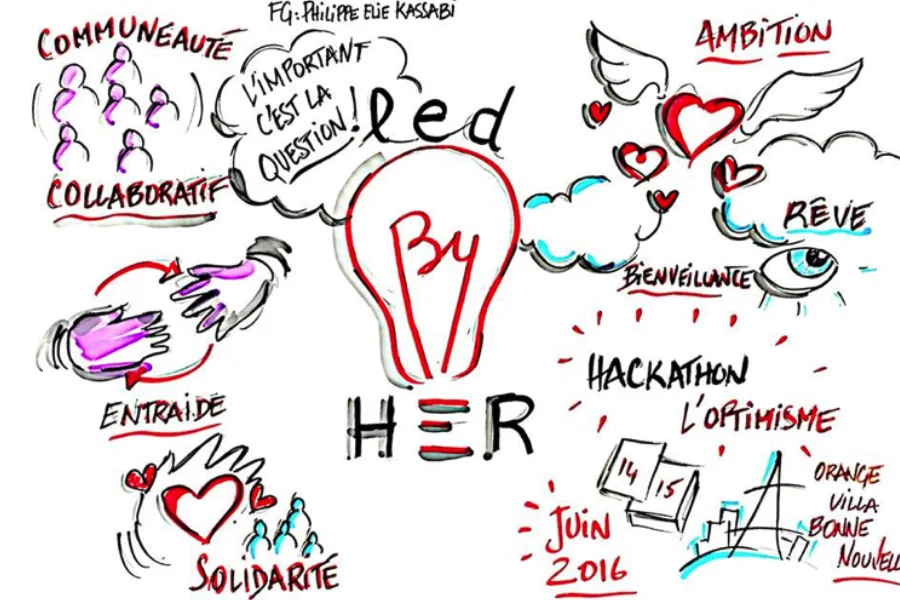
Founded five years ago by Chiara Condi, Led by Her is an association that helps women victims of violence rebuild their lives, and their identities, through entrepreneurialism.
I waited six months to find out if I’d made the cut. And when I got the news this Fall that I was selected to join the mentorship community I was thrilled and totally honored!
Meeting Chiara, the Led By Her volunteer community, the students in this year’s program and my fabulous mentoree has stirred something inside of me that I’ve neglected for so long.
The fabulous feeling of being part of a cause that you care about deeply.
Many of my clients come to me because they feel out of synch with their careers, like their values are heading in one way and their reality is veering in the opposite direction.
As each day goes by they feel like they’re drifting farther and farther away from the person they want to be and the person they are expected to be professionally.
As those poles moves gradually in opposite directions, the feel like they’re literally going to snap. But they have no idea how to bridge that gap and bring those two worlds into alignement.
One way to crack that conundrum is to give your brain a break and feel your way to some answers.
If this resonates with you a super easy way to start is by asking yourself:
“To make a positive impact on others through my work, I’d love to…”
Your answers might surprise you. And be easier than you think.
Whether it’s a small internal shift within your current role. Sharing your time and expertise with a charity. Or infusing more meaning into the business you already run.
Your answers might lead you to some additional questions that help shed light on what you’re next move could be.
Give it a try and let me know what you discover.

Using Your Full Frame
Adults are amazing at respecting limits that don’t really exist.
And kids are amazing at disrespecting limits that do really exist.
Cries, tantrums, arguments, flattery, debate, negotiation. There’s no shame to their game.
They’ll use whatever they’ve got to see how a limit can be toppled, overturned and redesigned.
As we get older, though, and move along in life we adapt to the limits that the world throws back at us.
Conditioning, rules, beliefs — all of these boundaries become a part of the way we perceive the world and operate within it.
But as our habits and expectations become more and more entrenched, we start seeing limits where they don’t exist, eventually boxing ourselves into tighter and tighter spaces.
The truth, though, is that what’s not explicitly forbidden, is technically allowed.
Adults are amazing at respecting limits that don’t really exist.
And kids are amazing at disrespecting limits that do really exist.
Cries, tantrums, arguments, flattery, debate, negotiation. There’s no shame to their game.
They’ll use whatever they’ve got to see how a limit can be toppled, overturned and redesigned.
As we get older, though, and move along in life we adapt to the limits that the world throws back at us.
Conditioning, rules, beliefs — all of these boundaries become a part of the way we perceive the world and operate within it.
But as our habits and expectations become more and more entrenched, we start seeing limits where they don’t exist, eventually boxing ourselves into tighter and tighter spaces.
The truth, though, is that what’s not explicitly forbidden, is technically allowed.
Until you prove you can’t do it, then you technically can.
There are a zillion ways that you can play around with this logic:
If you don’t ask for the raise, then how do you know if you can have one?
If you don’t ask for an extension, then how do you know if the timeframe is flexible?
If you don’t ask for feedback, then how do you know what people are thinking?
If you don’t empower your team, then how do you know what they’re capable of?
If you don’t start, then how do you know if you can continue?
In day-to-day conversation this comes out as:
“Oh no, I just couldn’t ask her to recommend me for that position.”
“No one would ever want to read the stuff that I write.”
“I could never earn money selling my artwork.”
“There’s no way in hell that my boss would let me take the afternoons off on Wednesday.”
During my discovery calls with clients I ask a question that tends to stir the pot:
“What have you already put in place to move your goal forward?
There’s always a long pause on the other line, and then a voice that starts to list concrete actions that have been tested, or, at times, a voice that says "nothing yet."
Those answers help you see just how far you've stretched your frame to get what you want, and where you've encountered external or internal friction along the way.
Why is this important as a first step in moving a goal forward?
We can become so fixated on what we’re incapable of doing, or why something wouldn’t work out, that we forget to take a stab at it.
We feel boxed in by boundaries that haven’t been really been tested.
So tell me, if you could throw a tantrum to get what you want:
What would that be?
How is that important to you?
And what limits do you need to test to get it?

When Ideas Get Under Your Skin
I had a very intimidating social studies teacher in High School named Mr Savage.
He would walk into the classroom, silently go up to the blackboard, scribble a provocative open question, like “What is democracy?” in his chicken-scratch handwriting and then stare back at the class with his beady little eyes. (can you tell how much of a fan I was??)
He’d smile slyly with pinched lips revealing a little scar alongside his mouth. Then he’d gesture to the class to let the debate begin.
I dreaded that moment. I was a shy and insecure adolescent and that kind of intellectual dogfighting made me shrink even further into my shell.
Mr Savage didn’t give homework, but he did assign two big writing projects per year that were famously tough. For one project we had to propose our ideal presidential candidate and then argue and defend why we thought he or she should win.
I had a very intimidating social studies teacher in High School named Mr Savage.
He would walk into the classroom, silently go up to the blackboard, scribble a provocative open question, like “What is democracy?” in his chicken-scratch handwriting and then stare back at the class with his beady little eyes. (can you tell how much of a fan I was??)
He’d smile slyly with pinched lips revealing a little scar alongside his mouth. Then he’d gesture to the class to let the debate begin.
I dreaded that moment. I was a shy and insecure adolescent and that kind of intellectual dogfighting made me shrink even further into my shell.
Mr Savage didn’t give homework, but he did assign two big writing projects per year that were famously tough. For one project we had to propose our ideal presidential candidate and then argue and defend why we thought he or she should win.
Feeling totally overwhelmed, I asked my dad for help. He’s a school teacher and a very opinionated liberal. This kind of thing was totally his cup of tea.
He suggested Ralph Nader. This was back in 1990 and Nader at the time was a relative unknown. It seemed like a cool, underground pick. I let me dad run with it.
My dad wound up writing most of the paper. I was nervous handing in the assignment and felt a bit guilty about getting a great grade on something I didn’t write on my own. Then I was thrown a curveball: I got a really shitty, grade on that paper. Or rather, my dad got a really shitty grade.
And what was the message that stuck with me after this experience? Not, “cheating is bad”, or “Ralph Nadar is a terrible presidential candidate,” or “failing with your own ideas is better than failing with someone else’s”.
No, the one that stuck for me was:
You’re a terrible writer, Zeva. Your dad thought so, that’s why he wrote your paper.
I lived with this belief for a long time. In college, writing assignments were torturous. I’d spend double the time as my peers on my papers. I was ashamed every time I handed something in. Even when I got positive feedback on my work I was convinced that someone was just being generous and feeling pity for me.
The belief penetrated under my skin and became my ugly little secret: I was a terrible writer and a fraud for getting into my school.
Five years after graduation I moved to Paris and went on an interview at a magazine where a friend of mine had worked. Rebecca, the editor-in-chief of the magazine who interviewed me asked if I had any writing experience. I said “not outside of the writing I did in college.” She answered back, “well, you seem smart, and if you got through Vassar I’m sure you can write.”
She hired me on the spot.
I was thrilled to get a job, but terrified that my ugly little secret would slowly reveal its disgusting face and she’d realize that I was a total fraud.
But it was my job. I had no other choice. I had to write. And I started to get better and better at it.
Over time, I got some extra freelance jobs. People started to pay me well for my words.
I was slowly and steadily growing into the person that I was convinced I was not. A writer! Go figure.
Where am I going with this?
I speak to a lot of people who feel like they’re not credible or capable of doing something because long ago they had a bad experience, or were told that they weren’t great at it.
Over time, those feelings grow into beliefs and get more massive, dense and resilient until they become as real and unquestionable as the nose on your face.
How does this happen?
“Ideas get under your skin, simply by sticking around for long enough” explains the neuroscientist Lisa Feldman Barrett in her book (that I’m obsessed with), How Emotions Are Made. “Once an idea is hard-wired, you might not be in a position to easily reject it.”
Some of these hard-wired, unshakeable beliefs could be:
I’m bad at writing
I’m bad at relationship
I’m bad with numbers
I’m bad at business
I’m bad with conflict
I’m bad at confrontation
I’m bad at making decisions
I’m bad at making changes
I’m bad at being bad….
There is nothing concrete about these beliefs. They’re just dirty little secrets that prevent us from taking action on what we want. From seizing opportunities to igniting change.
What dirty little secret prevents you from moving forward with meaning?
I promise, I won’t tell :)

Get into your growth groove
It was the official rentrée, the first chaotic day of reality after a long summer break.
We were walking among perfectly-coiffed kids with their new backpacks and outfits on their way to school when I glanced over and saw my toddler hobbling along with his heels hovering in the air.
“Shit!” I said to my husband. “We forgot to get him new shoes.”
My son was so obsessed with his red suede Adidas we conveniently overlooked him busting out of them.
Next day at the shoe store, we embarrassing learned he had grown, not one, but two shoe sizes! Needless to say when he put his new sneakers (Adidas, again!) he was born-again.
Ripping his beloved pacifier out of his mouth big-boy style, he started running — down the ailes, down the street, to the park, around the park. Tirelessly, enthusiastically, like he had a new set of Duracell batteries on full blast.
It was the official rentrée, the first chaotic day of reality after a long summer break.
We were walking among perfectly-coiffed kids with their new backpacks and outfits on their way to school when I glanced over and saw my toddler hobbling along with his heels hovering in the air.
“Shit!” I said to my husband. “We forgot to get him new shoes.”
My son was so obsessed with his red suede Adidas we conveniently overlooked him busting out of them.
Next day at the shoe store, we embarrassing learned he had grown, not one, but two shoe sizes! Needless to say when he put his new sneakers (Adidas, again!) he was reborn.
Ripping his beloved pacifier out of his mouth big-boy style, he started running — down the ailes, down the street, to the park, around the park. Tirelessly, enthusiastically, like he had a new set of Duracell batteries on full blast.
It was a total and immediate energy upgrade.
As a kid, things like new shoes are empowering evidence of your growth. Your potential. Your energy. Your strength.
But what happens as an adult? When the changes in your body no longer signal empowering growth? What other signs define it?
Since la rentrée kicked off there’s been a common theme among the people I’ve met with.
Growth. And the desire for more of it day-to-day.
As a coach, when I hear someone talk about big concepts like "growth" my next move is to dig in and investigate just what it means:
How do you know when you’re growing?
What do you need to grow?
What does it look like?
What does it feel like?
What does it allow you to do?
To one woman I spoke with it means working transversally across different formats and departments and having the freedom to innovate and bring value in her own unique way.
To another it means transforming theoretical concepts into tangible actions and making a concrete impact in the word.
To another it means going super deep and developing her skills and proficiency in a specific field.
Here’s what’s important to remember about the growth groove: it’s not a one-size-fits all concept.
It means something different to us all.
But it is a mindset that needs nurturing if you want to feel alive.
Without growth, you wind up feeling dullness, stagnation, inaction, sluggishness.
The very feelings that make you want to curl up and call in sick for a few days, or even a few weeks.
In France insurance companies and the government are freaking the hell out. Since the beginning of 2018 there’s been a 6% increase in medical leave payments.
The cause? No one can say for sure, but the government thinks employees are feeling more and more stressed out and crappy at work and they want companies to do something to fix that (or start paying the bills).
Growth isn’t a blanket panacea. I'm not suggesting that it's the end-all solution to a suffering system.
But I do believe that companies should spend more time observing and asking questions about the type of growth that each employee craves.
It’s likely not what they think it means to their employees (moving up the ladder, getting more vacation time, or a bigger salary). It could be a lot simpler than that.
My suggestion?
If you’re a manager and are struggling with team burn-out:
Get to know the growth needs of each person on your team. Spend quality time on this. Look for concrete examples. Observe trends. In what context does your employee thrive? When do they limp around like a toddler in tight shoes?
If you are thinking about making a professional change because you’re not growing:
Get crystal clear on what growth means, looks and feels like to you in your quest for self-realization.
So tell me dear reader, what’s your new pair of Adidas like? How do they look? What do they feel like? And what do they allow you to do? Leave a comment below or send an email to: zeva@zevabellel.com

You Should Be Talking Business With Your Besties
So it turns out that Edith Wharton didn’t care much for her female peers.
In the copy of Old New York that I borrowed from my mom, the author of the introduction, Marilyn French, says that Wharton was “stubbornly disinterested” in the successful female writers of her era. A dismissive attitude French calls “horizontal hostility.”
The term “horizontal hostility” was coined in the 1970s by lawyer/activist/feminist Florynce Kennedy to describe destructive power dynamics between women. Be it shaming, attacking, belittling or flat out denying each other’s potential and talent.
Women have come a long way since.
So it turns out that Edith Wharton didn’t care much for her female peers.
In the copy of Old New York that I borrowed from my mom, the author of the introduction, Marilyn French, says that Wharton was “stubbornly disinterested” in the successful female writers of her era. A dismissive attitude French calls “horizontal hostility.”
The term “horizontal hostility” was coined in the 1970s by lawyer/activist/feminist Florynce Kennedy to describe destructive power dynamics between women. Be it shaming, attacking, belittling or flat out denying each other’s potential and talent.
Women have come a long way since.
Within the last few years there’s been a boom in the number of groups and businesses created by women to support women, such as:
- Networking groups like PWN and ChIPS
- Entrepreneurial associations like Led By Her and The World Association of Women Entrepreneurs
- Co-working/social clubs like The Wing and CoWomen
- Recruiting agencies like The Mom Project and Mothers & Careers
- Funding platforms like Backstage Capital and iFundWomen
- Election groups like Get Her Elected and Emily's List
But are women really all holding hands, singing "Kumbaya" and hoisting each other up to the higher echelons of the ladder?
Let’s be honest, we’ve still got a long way to go.
One way we can accelerate things is by taking a good, hard look at our personal beliefs and habits, especially when it comes to the women we care about and know the most: our girlfriends.
And here's why.
In a recent article in Forbes, author Mallun Yen, ChIPs co-founder and CEO, explains that: “Women’s friendships tend to become deeply personal and intimate very quickly. Trying to make the leap directly from intense personal relationships to business can feel abrupt and awkward to both sides. So the very thing about female friendships that is deservedly celebrated may also be holding us back from generating vital business with each other."
When girlfriends get together they tend to hold back sharing professional help, contacts and advice because it feels weirdly disingenuous, like a shady transaction out of a "Breaking Bad" episode.
“Doing deals with your buddies is a time-honored way to build your book of business," continues Yen. "But women tend to struggle when it comes to mixing money and friendship, cutting themselves off from one of the most effective tactics in the constant struggle to get ahead. "
"So why is it that we’re so hesitant to do deals with our friends—the very people we know have our backs?” asks Yen.
That's a damn good question don't you think?
What prevents us from sitting down with a bestie over a bottle of rosé to swap stories about marriage squabbles and potty-training disasters, and then fifteen minutes later whip open our iPhones to make an invaluable introduction to advance each other's careers?
If it’s just the antiquated belief that we can’t mix business with pleasure because we care so much about the authenticity of our friendship, then maybe we need to redefine the concept of friendship.
So, the next time you meet with a close friend for lunch or drinks or coffee, test out some non-icky tools and techniques to kick each other's professional goals into high gear.
And then use them on interesting women you encounter at events.
At work.
At dinner parties.
Why not make that one of your micro-actions for the month?

Like bad ass flowing water
I reluctantly turned down a perfect margarita on the rocks at the lively Mexican restaurant we were dining at. I had to drive the whole kit and caboodle back to my mom's house in upstate NY and the roads are tricky there at night.
It was a good thing I didn't indulge.
Fifteen minutes into our drive we had to shut off the radio, get the kids to stop fighting and seriously focus on the road because we were suddenly caught in a thunderstorm so intense it felt like an end-of-the-world action film.
I’ve never seen that much water fall that hard and that quickly. And for miles and miles and miles. I kept my calm for the kids but I was freaking the hell out.
It reminded me how bad ass water can be. It’s super discreet until it’s totally not. And it never seems to try that hard.
I reluctantly turned down a perfect margarita on the rocks at the lively Mexican restaurant we were dining at. I had to drive the whole kit and caboodle back to my mom's house in upstate NY and the roads are tricky there at night.
It was a good thing I didn't indulge.
Fifteen minutes into our drive we had to shut off the radio, get the kids to stop fighting and seriously focus on the road because we were suddenly caught in a thunderstorm so intense it felt like an end-of-the-world action film.
I’ve never seen that much water fall that hard and that quickly. And for miles and miles and miles. I kept my calm for the kids but I was freaking the hell out.
It reminded me how bad ass water can be. It’s super discreet until it’s totally not. And it never seems to try that hard.
It doesn't second guess itself and wonder:
"How am I going to get around this thing?”
“Is this too much?”
“Am I allowed to be here?“
"Should I be doing it this way?"
Nope. It just flows. Over, through, around or in-between with a force that’s relentless, rhythmic, mesmerizing.
I’m fascinated by the concept of “flow.” Being in it. Watching it. Seeing what comes out of it.
My favorite part of my visualization workshop is when the group arranges their cut-out imagery on their vision boards with my R&B play list going on in the background.
Everyone's so focused and absorbed by what they’re doing there’s this humming flow to their movements. With little time to question their moves, they just have to go with what feels right.
Like bad ass flowing water.
When we behave like water we learn a lot about what we naturally migrate towards.
What we do when we are at our intuitive best. When everything feels totally in sync and easy and fluid.
For me that happens on a few specific occasions.
- When I cook.
- When I converse.
- When I walk.
- When I coach.
- When I write.
We so often over-complicate things. Try to force ourselves to be or become someone that we’re not. But what if there was less friction and more flow to our goals and our desires?
Try that idea on for size if you want with these questions:
- In what three situations do you intuitively know what to do?
- What's going on in those moments?
- How does it feel to be there?
- How often do you allow yourself to go there?
- What would happen if you strengthened that flow in you?
- Where would that get you?
PS. Speaking of "flow," there’s a three-hour Life Flow exercise that I love that clarifies desires based on natural tendencies, strengths and passions. At the end of the experience you’ll know exactly what steps you need to take right now to bring your goals to life.
I don’t usually offer Life Flow as a stand-alone coaching exercise, but it’s a great tool to get through the overwhelm of Fall in order to find your footing to move ahead with confidence during this tricky time of the year.